
If You Love Some One with Addison's Disease
Jill Battle | JUN 4, 2024
I believe if we EDUCATE ourselves about our ADDISON'S DISEASE...we can understand and manage it as best as we can.
One thing I have worked very hard on the last 10 years. And I know it has helped me have the best quality of life.
So let's chat CORTISOL.
What is cortisol?
Cortisol is a glucocorticoid hormone that your adrenal glands produce and release.
Glucocorticoids are a type of steroid hormone. They suppress inflammation in all of your bodily tissues and control metabolism in your muscles, fat, liver and bones. Glucocorticoids also affect sleep-wake cycles.
Cortisol is an essential hormone that affects almost every organ and tissue in your body.
It plays many important roles, including:
☑️ Regulating your body’s stress response.
☑️ Helping control your body’s use of fats, proteins and carbohydrates, or your metabolism.
☑️ Suppressing inflammation.
☑️ Regulating blood pressure.
☑️ Regulating blood sugar.
☑️ Helping control your sleep-wake cycle.
It has many important effects and functions throughout your body aside from regulating your body’s stress response.
INCLUDING
☑️ Acute stress
☑️ Chronic stress
☑️ Traumatic stress
Your body releases cortisol when you experience any of these types of stresses.
What does cortisol do to my body?
Almost all tissues in your body have glucocorticoid receptors. Because of this, cortisol can affect nearly every organ system in your body, including:
☑️ Nervous system.
☑️ Immune system.
☑️ Cardiovascular system.
☑️ Respiratory system.
☑️ Reproductive systems (female and male).
☑️ Musculoskeletal system.
☑️ Integumentary system (skin, hair, nails, glands and nerves).
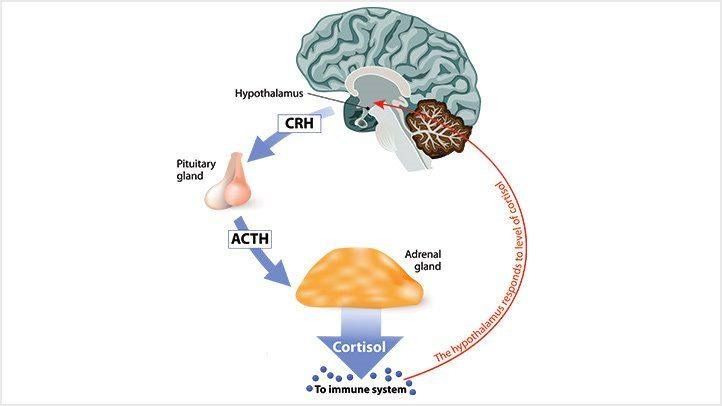
More specifically, cortisol affects your body in the following ways:
Regulating your body’s stress response: During times of stress, your body can release cortisol after releasing its “fight or flight” hormones, such as adrenaline, so you continue to stay on high alert. In addition, cortisol triggers the release of glucose (sugar) from your liver for fast energy during times of stress.
Regulating metabolism: Cortisol helps control how your body uses fats, proteins and carbohydrates for energy.
Suppressing inflammation: In short spurts, cortisol can boost your immunity by limiting inflammation. However, if you have consistently high levels of cortisol, your body can get used to having too much cortisol in your blood, which can lead to inflammation and a weakened immune system.
Regulating blood pressure: The exact way in which cortisol regulates blood pressure in humans is unclear. However, elevated levels of cortisol can cause high blood pressure, and lower-than-normal levels of cortisol can cause low blood pressure.
Increasing and regulating blood sugar: Under normal circumstances, cortisol counterbalances the effect of insulin, a hormone your pancreas makes, to regulate your blood sugar. Cortisol raises blood sugar by releasing stored glucose, while insulin lowers blood sugar. Having chronically high cortisol levels can lead to persistent high blood sugar (hyperglycemia). This can cause Type 2 diabetes.
Helping control your sleep-wake cycle: Under regular circumstances, you have lower cortisol levels in the evening when you go to sleep and peak levels in the morning right before you wake up. This suggests that cortisol plays a significant role in the initiation of wakefulness and plays a part in your body’s circadian rhythm.
Optimum cortisol levels are necessary for life and for maintaining several bodily functions.
SO LET'S REVIEW through the EYES of someone with Addison's disease.
1. We do not produce cortisol from the adrenal glands
2. We depend on daily replacement medication for cortisol in a form of steroids
3. We have no means of test our cortisol levels and adjusting our meds
4. We often experience low cortisol symptoms or in extreme cases of low cortisol experience a LIFE THREATENING ADRENAL CRISIS
LET'S REVIEW some keys terms from the notes above
1. Cortisol is an essential hormone that affects almost every organ and tissue in your body
2. It has many important effects and functions throughout your body aside from regulating your body’s stress response.
3. Optimum cortisol levels are necessary for life and for maintaining several bodily functions.
4. Almost all tissues in your body have glucocorticoid receptors. Because of this, cortisol can affect nearly every organ system in your body
SO IF YOU LOVE SOMEONE with ADDISON'S DISEASE...please know when our cortisol is LOW....every tissue in our body is affected.
Every cell is compromised. Every cell is struggling with NORMAL bodily functions. Every cell is fighting for life.
I can personally tell you for it feels like every trillion cell is CRYING in pain. CRYING for help. CRYING to be saved.
I feel like I am in LOW BATTERY MODE.
It breaks my heart some days.
Somedays I am angry.
Somedays I don't feel anything.
SO IF YOU LOVE, SOMEONE WITH ADDISON'S please know when we are LOW...we literally are struggling inside to stay alive. Now our bodies are under STRESS only AMPLIFYING the problem.
We need your support, compassion, and your understanding.
We don't want to feel like this. We want to live.
Help us live by holding our hand and help us get through to tomorrow.
Trust me...love goes a long way!
Love Warrior Jill xxoo

Jill Battle | JUN 4, 2024
Share this blog post
 OfferingTree